Steam Frame: Everything You Need to Know About Valve's Quest Competitor
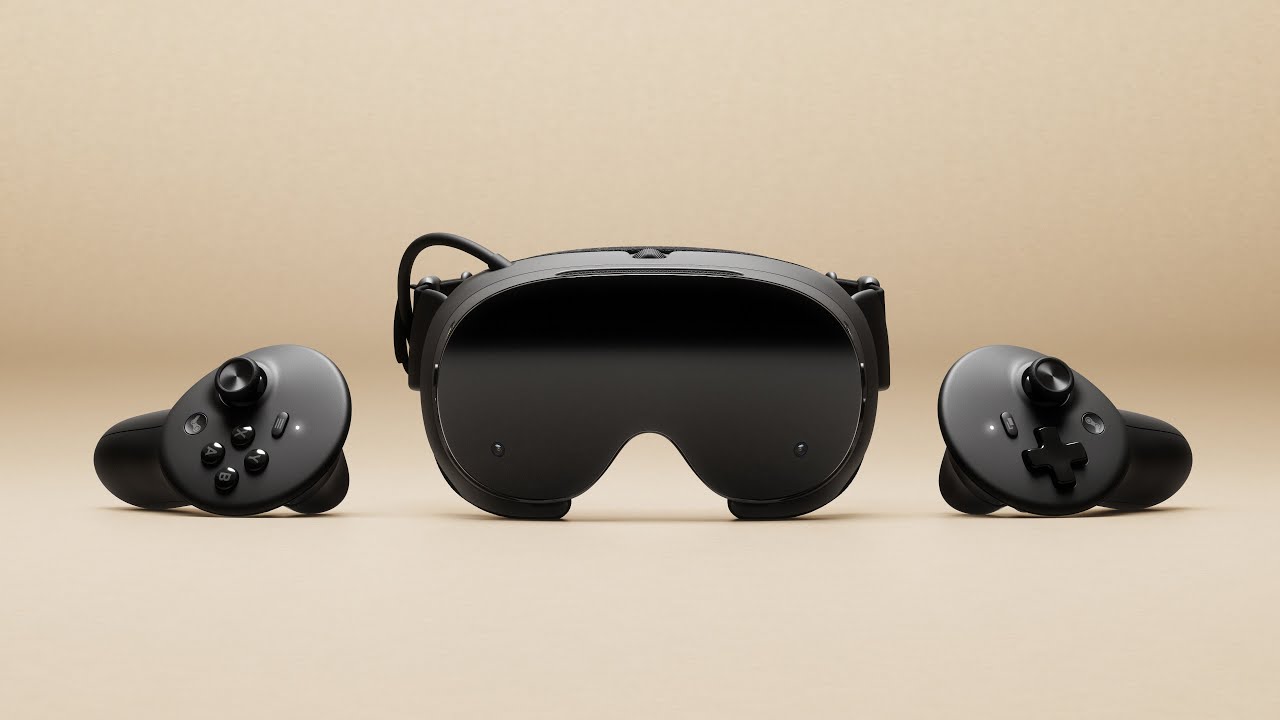
Steam Frame: Everything You Need to Know About Valve’s Quest Competitor
Valve is making its biggest move into standalone VR. The company behind Half-Life: Alyx and the Steam platform that dominates PC gaming is entering the standalone VR market with Steam Frame. Expected to launch in early 2026, this new headset represents the first serious challenge to Meta’s dominance in the standalone VR space from a major platform holder.
After years of rumors and code references pointing to a device codenamed “Deckard,” Valve officially announced Steam Frame in November 2025 alongside a new Steam Machine console and updated Steam Controller. The announcement got the VR community talking. Steam Frame isn’t just another standalone headset—it combines the flexibility of Android-based standalones with the power of PC VR streaming and the vast library of Steam games.
Let’s dive into everything we know about this ambitious new headset.
Why Steam Frame Matters
For years, the standalone VR market has belonged almost entirely to Meta. The Quest line has sold tens of millions of units, establishing Meta’s Horizon OS as the default platform for mainstream VR. While competitors like HTC, Pico, and now Google with Android XR have attempted to challenge this dominance, none have possessed the combination of platform reach, developer relationships, and gaming credibility that Valve brings to the table.
Steam is the world’s largest PC gaming platform with over 130 million active users. Valve’s previous VR headset, the Valve Index, established a reputation for premium quality even if its high price and requirement for base stations limited its audience. Half-Life: Alyx remains the gold standard for VR game design, proving that Valve understands immersive gaming at a fundamental level.
Steam Frame combines all of these advantages with a crucial new capability: the ability to run Android applications, including Quest games, through a compatibility layer called Lepton. This means Steam Frame could theoretically access not just the entire Steam library but also the Quest game catalog that developers have built over the past several years.
The timing is also significant. Meta recently announced major layoffs at Reality Labs, closed several first-party VR game studios, and canceled high-profile projects including a Harry Potter VR game. As Meta appears to be pulling back from aggressive VR gaming investment, Valve is stepping forward with renewed commitment to the platform.
Hardware Specifications: A Detailed Breakdown
Steam Frame represents a significant leap forward in standalone VR hardware. Let’s examine the specifications in detail.
Display and Optics
The headset features dual LCD panels with a resolution of 2160 by 2160 pixels per eye. This places it roughly on par with Meta Quest 3 in total pixel count while offering a more square aspect ratio that may provide better vertical field of view coverage.
Refresh rate options are flexible, supporting 72Hz, 80Hz, 90Hz, and 120Hz modes, with an experimental 144Hz option for those who want maximum smoothness. This matches the refresh rate flexibility that made the original Valve Index popular among enthusiasts.
The lenses are multi-element pancake optics, which Valve describes as offering “very good sharpness across the full field of view.” The company states the field of view is “conservatively” 110 degrees horizontal and vertical, which would actually exceed the Quest 3’s 110 by 96 degree specification. Physical IPD adjustment is handled through a dial on top of the headset, allowing users to precisely match their interpupillary distance for optimal clarity and comfort.
Processing Power
At the heart of Steam Frame is Qualcomm’s Snapdragon 8 Gen 3 chipset paired with 16GB of LPDDR5X RAM. This represents a meaningful upgrade over the XR2 Gen 2 chip used in Quest 3 and Quest 3S.
The GPU is an Adreno 750, which on paper offers roughly 25% more raw performance than the Adreno 740 in Quest 3. When you factor in that Quest 3 underclocks its GPU slightly while Steam Frame does not, the real-world performance difference grows to over 30%. Add eye-tracked foveated rendering into the mix and Steam Frame could potentially deliver significantly better standalone graphics than anything else on the market.
The CPU improvements are even more dramatic. Estimates suggest Steam Frame will have around 50% better single-threaded performance and roughly 100% better multi-threaded performance compared to Quest 3. This additional CPU headroom could prove crucial for running emulated x86 games and Android applications with complex logic.
Storage options include 256GB and 1TB UFS models, with a microSD card slot for expansion. In a clever touch, you can swap microSD cards between Steam Frame, Steam Deck, and the new Steam Machine, and your games will be instantly available on any device.
Weight and Comfort
Valve has put significant engineering effort into making Steam Frame comfortable for extended sessions. The core “frontbox” module weighs just 185 grams. With the default facial interface, battery strap, and speakers installed, the total system weight is 440 grams.
This makes Steam Frame notably lighter than Quest 3 (which weighs 515g with its stock strap) while offering a better-balanced design with the battery located at the rear. The strap is fabric-based with soft padding on the battery unit, allowing it to naturally conform when resting your head against furniture. For portability, the entire assembly can “collapse” flat against the lenses.
The modular design extends to customization. Valve will release CAD files and electrical specifications for the facial interface and headstrap, enabling third parties to build custom accessories. Someone could create a rigid strap with halo-style fit, or a fully soft travel strap with a tethered battery pack. The ecosystem of accessories should grow quickly.
Tracking and Passthrough
Steam Frame uses inside-out tracking via four outward-facing grayscale fisheye cameras. No base stations are required or supported. The cameras are positioned at the top corners and front bottom of the headset, providing wide tracking coverage.
For dark room operation, infrared illuminators bathe your environment in IR light that the cameras can detect. This enables tracking and passthrough in complete darkness, which is a meaningful advantage over headsets that rely solely on visible light.
Passthrough is functional but basic. The two front cameras provide a monochrome view of your surroundings at lower resolution than dedicated mixed reality cameras. Valve has clearly prioritized VR gaming over AR applications, at least in this initial version.
However, the front expansion port opens up future possibilities. It provides a dual 2.5Gbps MIPI camera interface and a one-lane Gen 4 PCIe data port. Valve suggests this could support color cameras, depth sensors, face tracking modules, and other peripherals. Third-party developers will likely create mixed reality accessories to fill this gap.
Controllers
The Steam Frame Controllers take a different approach than Quest’s Touch controllers. While the ringless design looks similar to Meta’s Touch Plus, the input layout is fundamentally different.
All four face buttons (A, B, X, Y) are placed on the right controller, while the left controller gets a D-pad. Both controllers have an index bumper in addition to the standard index trigger. The result is that the two controllers together have every input found on a standard gamepad, making them usable for both VR and traditional flatscreen gaming.
The controllers feature capacitive sensing on all inputs and the handles, enabling finger tracking. They also use tunneling magnetoresistance (TMR) thumbsticks, which should provide better precision and dramatically improved resistance to stick drift compared to traditional potentiometer designs. Anyone who experienced drift on their Index Knuckles controllers will appreciate this upgrade.
Unlike the Index controllers, Steam Frame controllers don’t include built-in hand straps. Valve will sell these as optional accessories for users who want them.
Each controller runs on a single AA battery and should last around 40 hours of use, though heavy haptic feedback will reduce this.
One notable absence: Steam Frame does not currently support controller-free hand tracking. Some form of input device is required.
The Software Stack: SteamOS, Proton, and Lepton
What makes Steam Frame truly revolutionary isn’t the hardware alone. It’s the software ecosystem that enables the headset to run games from multiple platforms.
SteamOS and Linux
Steam Frame runs a VR-optimized version of SteamOS, Valve’s Arch Linux-based operating system. If you’ve used a Steam Deck, the interface will feel immediately familiar. The same fundamental approach applies: an optimized gaming-focused frontend running on a full Linux system that you can access in desktop mode if needed.
Native Linux games run directly. This includes a growing number of VR titles that have been ported to Linux by their developers.
Proton for Windows Games
For Windows games, Valve employs Proton, the compatibility layer it has been developing with CodeWeavers for nearly a decade. Proton translates Windows API calls to Linux equivalents, allowing the vast majority of Windows games to run on Linux with minimal performance impact.
The challenge is that Steam Frame uses an ARM processor, not the x86 architecture that Windows games expect. To solve this, Valve has integrated FEX-Emu, an open-source tool for emulating x86 applications on ARM Linux devices. According to Valve, the performance impact is “shockingly small,” on the order of a few percent.
This means Steam Frame can technically run almost any game on Steam, including SteamVR titles. The caveat is that the mobile chipset has a fraction of the processing power of a gaming PC. Simpler, well-optimized games at lower settings will run well standalone, but demanding titles like Half-Life: Alyx will require streaming from a PC.
Valve will introduce a “Steam Frame Verified” program similar to Steam Deck Verified, marking games that have been tested and perform well on the standalone hardware.
Lepton: The Android Game Changer
The standout software feature is Lepton, Valve’s fork of Waydroid, an Android container/compatibility layer. Lepton provides an Android Open Source Project (AOSP) runtime environment that can run Android APK files, including those designed for Meta Quest.
The Quest platform has years of exclusive content that developers invested heavily in creating. With Lepton, those developers can make their games available on Steam without a complete rebuild. The Steam store will begin accepting Android APKs for publication, creating an official path for Quest games to reach Steam Frame users.
Games that don’t require Google Play Services can even be sideloaded directly through the web browser. This opens up possibilities for indie titles, experimental projects, and apps that might not make it through official store channels.
The implications are significant. Steam Frame users may not need to choose between the Steam ecosystem and the Quest ecosystem. They could potentially access both, dramatically expanding the available content library from day one.

PC VR Streaming: The “Streaming-First” Approach
While Steam Frame can run games standalone, Valve positions it as a “streaming-first” headset. The company has invested heavily in making wireless PC VR as seamless as possible.
Dedicated Wireless Adapter
Every Steam Frame includes a Wi-Fi 6E USB adapter in the box. This adapter creates a dedicated 6GHz wireless connection between your PC and the headset, completely bypassing your home network.
The headset itself has dual Wi-Fi 7 radios. One connects to your normal home network for internet access on the 2.4GHz or 5GHz band. The other creates a 6GHz hotspot that communicates exclusively with the included adapter.
This architecture eliminates the common problems with wireless PC VR: router congestion, interference from other devices, poor router placement, and cheap ISP-provided equipment. SteamVR automatically detects the adapter and connects without any configuration required.
Users with high-quality existing Wi-Fi setups can skip the adapter if they prefer, but Valve suspects most people won’t.
Foveated Streaming
The real innovation is foveated streaming. Steam Frame’s built-in eye tracking continuously monitors where you’re looking and encodes the video stream at higher quality in that area while reducing quality in your peripheral vision.
This isn’t the same as foveated rendering, which requires individual games to support it. Foveated streaming works at the encoder level and applies to every game automatically. Your GPU renders the full frame, but the streaming encoder intelligently allocates bitrate based on your gaze, dramatically improving perceived quality without increasing bandwidth requirements.
Valve previously introduced a basic version of this feature for Quest Pro through Steam Link VR, but Steam Frame offers lower latency and greater precision because Valve controls the entire software stack on the headset side.
Developer Impressions and Engine Support
With developer kits in the wild, early impressions have begun to surface. The response has been overwhelmingly positive.
Godot Integration
Godot lead XR developer Bastiaan Olij livestreamed the Steam Frame setup process with Valve’s permission. Following his work, Godot 4.6 now includes official support for Android XR and Steam Frame. The Steamworks documentation provides detailed guides for integrating Godot projects with Steam Frame features including eye tracking and foveated rendering.
Olij praised the headset’s comfort, particularly noting how easy it is to put on and remove, and how stable it feels when pushed up to rest on the forehead. As someone who wears glasses, he found Steam Frame more accommodating than other headsets, though he plans to get prescription lens inserts.
The UI reminded him of Steam Deck, which isn’t surprising given they share the same underlying platform. Everything felt intuitive and well-organized.
Controller Features
Developers have highlighted the “Squeeze” functionality on the Steam Frame controllers, which appears to enable natural-feeling grab gestures. Combined with full finger tracking via capacitive sensors, interactions with virtual objects should feel more intuitive than button-based grabbing.
The documentation reveals additional inputs including “Squeeze touch” and “Squeeze click” variations, suggesting a nuanced approach to grip detection that could enable complex interactions.
Release Timeline
Based on developer comments, Steam Frame remains on track for “early 2026” release. Olij mentioned the device coming out “in the next couple of months,” suggesting Valve is confident in hitting its target window despite speculation about component pricing pressures that might cause delays.
Steam Frame vs. Quest 3: How Do They Compare?
Here’s how Steam Frame stacks up against its most direct competitor:
| Specification | Steam Frame | Quest 3 |
|---|---|---|
| Display Resolution | 2160×2160 per eye | 2064×2208 per eye |
| Refresh Rates | 72-120Hz (144Hz experimental) | 72-120Hz |
| Field of View | 110°H × 110°V | 110°H × 96°V |
| Chipset | Snapdragon 8 Gen 3 | Snapdragon XR2 Gen 2 |
| RAM | 16GB | 8GB |
| Storage Options | 256GB / 1TB + microSD | 128GB / 512GB |
| Weight (with strap) | 440g | 515g |
| Battery | Rear-mounted | Internal |
| Eye Tracking | Yes | No |
| Hand Tracking | No | Yes |
| Passthrough | Monochrome, low-res | Color, 4MP |
| PC Streaming | Dedicated 6E adapter included | Standard Wi-Fi |
| Operating System | SteamOS | Horizon OS |
| Android Apps | Yes (via Lepton) | Yes (native) |
| Windows Games | Yes (via Proton/FEX) | No |
| Price | TBA (cheaper than Index) | $499 (512GB) |
Steam Frame offers clear advantages in processing power, memory, storage expansion, weight distribution, and PC VR connectivity. Quest 3 counters with color passthrough for mixed reality, controller-free hand tracking, and a proven ecosystem with years of optimization.
The ability to run both Steam and Quest libraries could give Steam Frame the content advantage, but execution matters. Lepton’s compatibility with the full range of Quest games remains to be validated in practice.
Pricing and Availability
Valve hasn’t announced specific pricing, but stated that Steam Frame is expected to be cheaper than the Valve Index, which launched at $999 for the complete kit. This suggests a price point somewhere under $1,000, potentially in the $500-700 range that would directly compete with Quest 3.
Release timing is set for “early 2026,” which likely means Q1. Developer comments suggest Valve is confident in meeting this window.
Two storage variants will be available: 256GB and 1TB. Both include the wireless PC adapter and Steam Frame Controllers in the box.
Valve will sell controller straps as optional accessories for those who want the Index-style hand strap experience.
What This Means for the VR Industry
Steam Frame’s arrival represents a fundamental shift in VR market dynamics. For the first time, Meta faces a serious challenger with the resources, platform reach, and gaming credibility to compete at scale.
For Consumers
VR buyers will have a genuine choice between ecosystems for the first time in years. Steam Frame offers potential access to both Steam and Quest content libraries, premium PC VR streaming, and a device designed by a company whose primary business is gaming rather than social networking.
The competition should push both Meta and Valve to improve their offerings. Expect price competition, feature improvements, and increased investment in exclusive content.
For Developers
Developers gain a significant new platform to target. The ability to publish Android APKs on Steam opens a path for Quest developers to reach a new audience without starting from scratch. Native SteamVR developers get a wireless option that works seamlessly with their existing games.
The Steam Frame Verified program creates a clear target for optimization, similar to how Steam Deck Verified helped developers prioritize handheld compatibility.
For the Industry
Meta’s recent pullback from VR gaming investment raised concerns about the long-term health of the market. Valve’s entry with Steam Frame sends a strong signal that major companies still see opportunity in VR gaming.
The competition between SteamOS and Horizon OS could drive innovation across the industry, benefiting everyone from hardware manufacturers to game developers to end users.
Conclusion
Steam Frame is the most significant new VR hardware announcement in years. Valve has combined powerful standalone capabilities with seamless PC VR streaming, wrapped in a lightweight modular design with meaningful hardware advantages over the competition.
The software story is equally compelling. The combination of SteamOS, Proton, FEX-Emu, and Lepton creates a platform that can potentially run games from Linux, Windows, and Android ecosystems on a single device. If the execution matches the ambition, Steam Frame could offer the largest compatible game library of any VR headset.
There are uncertainties. Lepton’s compatibility with the full Quest library needs real-world validation. The lack of color passthrough limits mixed reality applications. No controller-free hand tracking means some use cases remain out of reach.
But the overall picture is compelling. Valve has clearly thought deeply about what a modern VR headset should be and built something that could genuinely compete with Meta’s best while opening new possibilities that Quest cannot match.
For VR enthusiasts who have been waiting for a serious Quest alternative, the wait is almost over.